
- Define the exception
- Check existing options
- Plan maintenance
Custom development is justified by a documented requirement, not simply a desire for a unique screen.
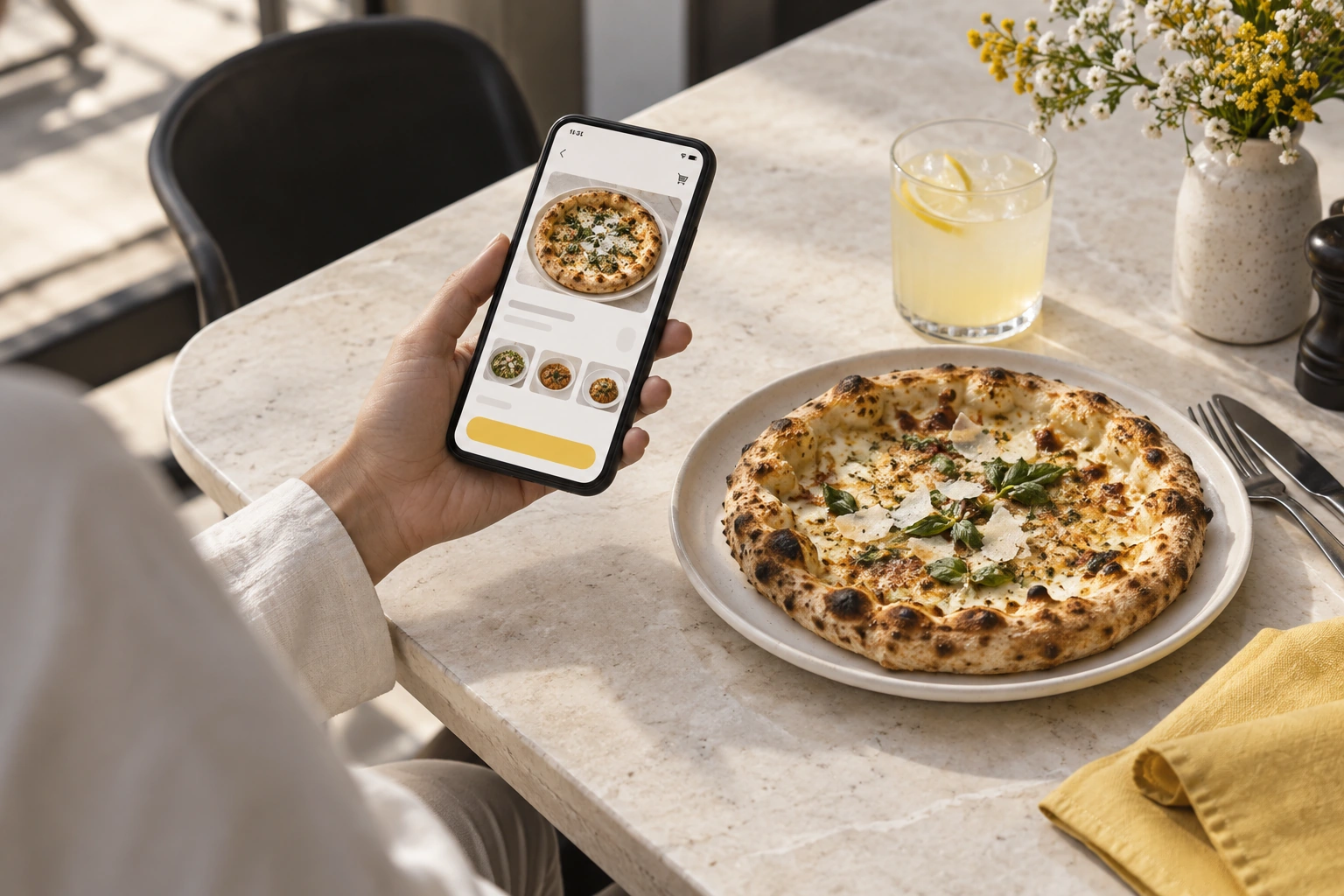
Illustrative decision process, not a product screenshot or customer result.Building an online food ordering system starts with deciding whether to configure an existing service or commission a custom implementation. The right choice depends on the restaurant's requirements, maintenance capacity and willingness to own technical operations.
Write the operating specification first
Describe menu choices, pickup/delivery rules, acceptance, preparation, payments and customer support. Include exception cases such as an unavailable item or uncertain payment.
Avoid starting with a screen list alone. A beautiful checkout without a clear order destination is not a complete system.
Compare configure versus build
| Approach | Work to evaluate |
|---|---|
| Existing service | Configuration, fit, contract and supplier dependencies |
| Custom implementation | Design, development, testing, hosting and maintenance |
| Connected existing systems | Integration ownership, failures and reconciliation |
Custom development can give flexibility, but it also creates responsibility for updates, security, monitoring and incident response. An existing service can reduce some implementation work while introducing scope and contract constraints.
Define the acceptance tests
Use the same tests regardless of approach: a normal order, required choices, a price change, an unavailable item, a duplicate submission and a cancellation. Verify customer messages and restaurant records.
For payments, use approved test facilities and verify the exact provider arrangement. Do not test with fake production leads or transactions without permission.
Plan operation after launch
Name the owners of menu maintenance, order monitoring and technical support. Agree how incidents are reported and how historical records can be accessed or exported.
Launch a limited scope and review real service exceptions. Building the software is not the end of the project if nobody is responsible for keeping the menu and workflow accurate.
Restrova provides an existing ordering website service and branded apps to evaluate against custom development. Review pricing, the app launch guide and request a demo with the specification.
Should I build a custom system to avoid monthly fees?
Compare total ownership cost, including ongoing development and support. Avoiding a subscription does not eliminate operating expense or the work required to keep the system dependable.
Can I begin with a website and add an app later?
Potentially, if the chosen architecture and supplier support that plan. Confirm how menus, orders and customer access would relate before treating it as an automatic upgrade.
A practical check: Decide what to build and what to configure
Illustrative scenario: Write the specific requirement that standard products cannot meet before commissioning custom development. Estimate maintenance and testing responsibilities alongside the initial build.
- Define the exception.
- Check existing options.
- Plan maintenance.
Decision rule: Custom development is justified by a documented requirement, not simply a desire for a unique screen.