
- Publish useful facts
- Connect relevant pages
- Maintain accuracy
Local restaurant SEO depends on accurate customer information, not repeating a city name throughout a page.
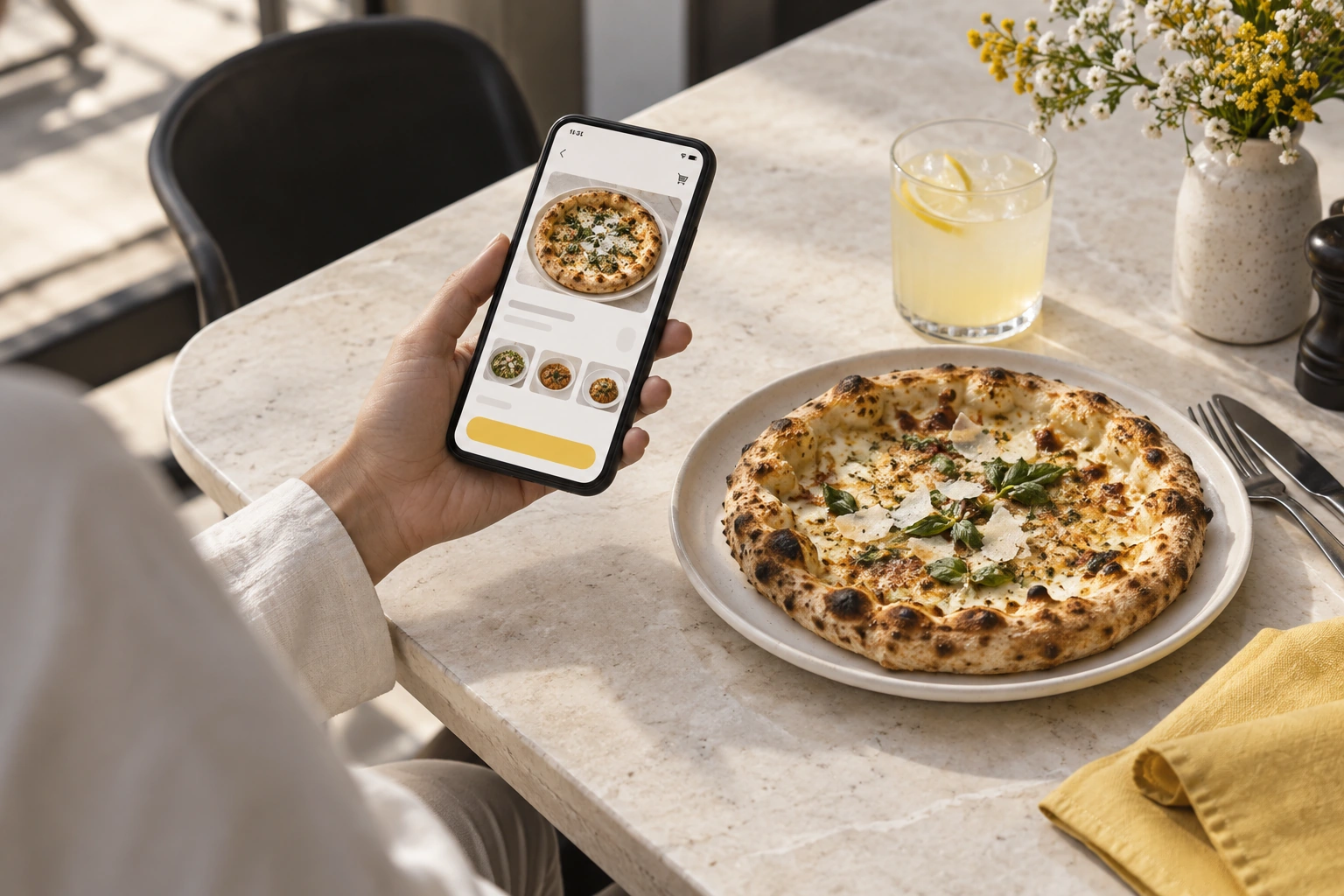
Illustrative decision process, not a product screenshot or customer result.Restaurant website SEO should help search engines and customers understand the restaurant's real menu, locations and ordering options. It is not a reason to create pages for every keyword or claim a guaranteed stream of direct orders.
Make useful information accessible
Keep important restaurant information in readable page content with clear navigation. Use descriptive page titles and links that help people find the menu, branch details and ordering destination. Google's SEO starter guide explains the crawl-and-understand foundations; following them does not guarantee indexing or ranking.
Avoid putting the only menu information inside an image or hiding essential content behind an interaction that cannot be accessed reliably.
Maintain accurate local and ordering details
Review the restaurant's actual name, address, hours and contact information across its owned website and managed listings. Create branch pages only for real locations with useful information.
Where supported, maintain an appropriate ordering link on the verified Business Profile. Google's business-link guidelines require an ordering link to support the ordering action. Availability and presentation can vary, so inspect the actual profile.
Build content around customer questions
Answer questions that affect a decision: which branch serves pickup, what a meal includes and how delivery works. Use genuine food images and approved product evidence.
Do not generate near-identical neighbourhood pages or unsupported claims about being the best restaurant. A smaller set of accurate pages can be more useful than a large set of repeated paragraphs.
Measure search and ordering separately
| Measure | What it establishes |
|---|---|
| Search impressions | Visibility for recorded queries |
| Search clicks | Visits from search results |
| Indexed URLs | Pages recorded in the search index |
| Completed orders | Actual transactions through the channel |
| Qualified enquiries | Relevant customer or business intent |
Use Search Console for available search evidence and appropriately consented analytics for the site journey. A click does not prove an order, and a ranking change does not prove that one edit caused it.
Restrova's ordering website service can be evaluated for the customer journey. Review the ordering comparison guide and request a demo.
Does structured data guarantee a rich result?
No. It must describe visible, accurate information and use supported properties, but search engines decide how results appear. Test implementation and avoid adding invented reviews or ratings.
A practical check: Make a restaurant's ordering information discoverable
Illustrative scenario: Check whether menu, location, hours and ordering links are available as readable page content. Keep the website and genuine business profiles consistent when details change.
- Publish useful facts.
- Connect relevant pages.
- Maintain accuracy.
Decision rule: Local restaurant SEO depends on accurate customer information, not repeating a city name throughout a page.